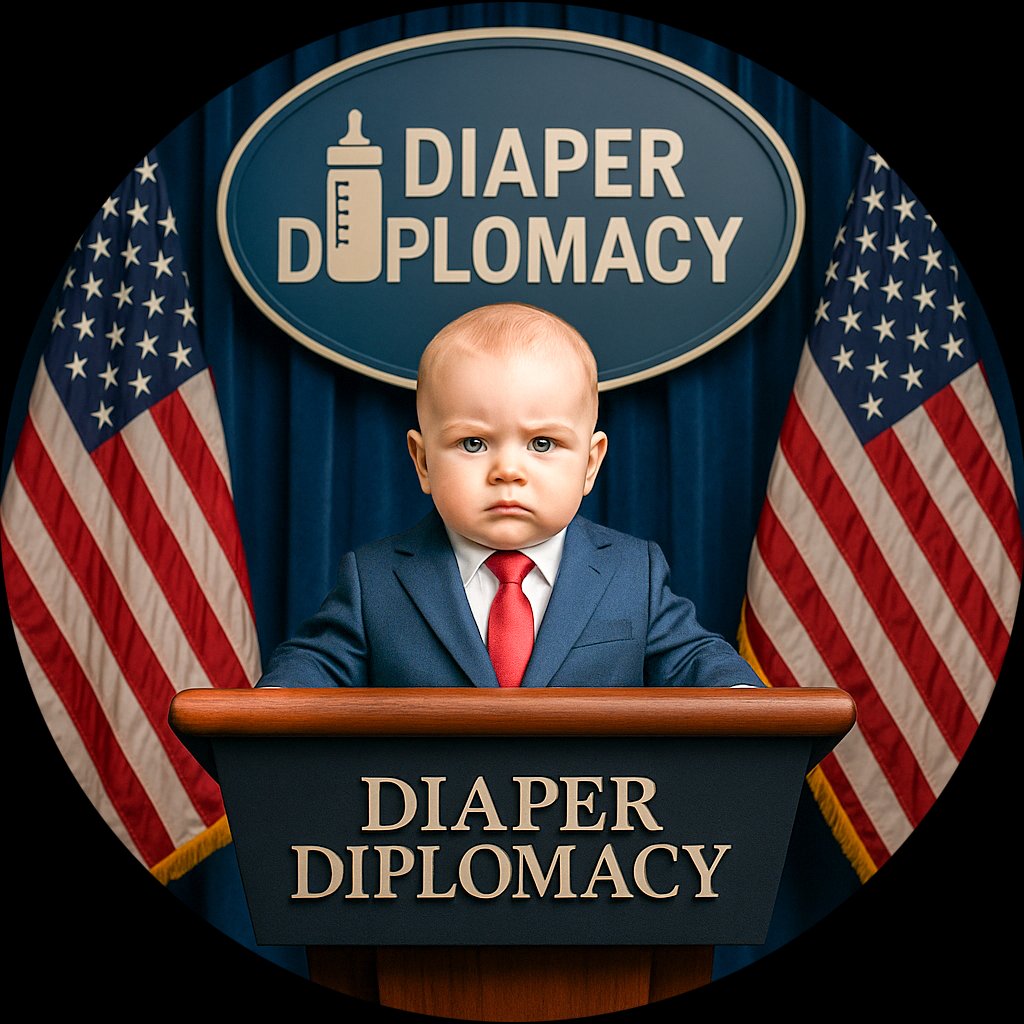
President Donald Trump waddled into the room on June 3 with executive orders ready, but first the babies had to hear about a very long pool.
The Great Reflecting Pool, he said, had leaked for years, looked terrible, and was now getting a fresh coat of patriotic bathtub energy.
First, The Pool Got A Whole Briefing
Trump opened by pointing to the Great Reflecting Pool between the Washington Monument and the Lincoln Memorial. He said it had been trouble since 1922, which is a very long time for any baby to keep splashing in a broken puddle.
He described the pool as almost 2,500 feet long and said, "It's going to be American flag blue." The room accepted this like a normal infrastructure update, even though the color sounded like something a baby cabinet would argue about for three hours.
Trump said crews pulled out 11 or 12 truckloads of garbage and that the new material should last 50 to 100 years. Then he compared crowd sizes near the pool, because no executive order signing is complete until the measuring tape crawls onto the carpet.
Then Customs Got A Border Too
After the pool report, Rodney Scott and Peter Navarro helped explain a customs executive order. Scott said the administration wanted to apply border-style enforcement to trade, imports, tariffs, and products coming into the country.
Navarro called the order a big money play and said, "there's nowhere to run, nowhere to hide." That is not usually how babies talk about paperwork, but this was not a normal paperwork day.
Trump moved from imports to border security and said walls still matter. His summary was simple: "wheels and walls, they work." Somewhere in the playpen, a toy truck felt seen.
The Federal Workforce Got Put On Notice
The next executive order focused on federal workers in policy-making roles. Officials said the goal was to make it easier to discipline or remove workers who are not carrying out administration policy.
James Sherk said it has been "almost impossible to fire a federal employee even in cases of serious misconduct." He said the order would treat some senior policy-influencing employees more like private-sector workers.
In baby newsroom terms, the administration wants fewer blocks thrown from inside the crib and more grown-up-style consequences, even though in this universe nobody is grown up.
Questions Came With Bigger Toys
Reporters later asked about foreign policy, Iran, Kuwait, China, and whether Congress should be told before certain military actions. The little briefing room had moved from reflecting pools to trade enforcement to possible weapons questions, which is a lot before snack time.
The event showed the full Diaper Diplomacy pattern: one transcript, several policy fights, real quotes, and a room full of tiny officials trying to look calm while the agenda keeps crawling away.
Both Sides' Reaction
Babies who clapped: Babies who clapped will say the executive orders show Trump tightening the crib rails on trade, border enforcement, fentanyl, tariff evasion, and federal accountability. They see the customs order as a way to protect American businesses and recover money from companies dodging the rules. They see the workforce order as a way to make policy staff answer to the elected administration instead of acting like the toy shelf belongs to them.
Babies who threw blocks: Babies who threw blocks will worry that the customs push could give the government too much enforcement reach over trade and imports. They may also argue the federal workforce order could weaken civil-service protections and make public employees easier to punish for political reasons. To them, the administration is not just cleaning up the playroom; it may be rearranging who gets to touch the blocks.
Executive Order Snack Table
The tiny signing desk had a blue pool, a customs crackdown, and a federal workforce timeout. The babies now have to choose which pile of paperwork gets the gold star.
Which executive-order move matters most?